





or enter your credentials below:
Find original art
>
Original Paintings for Sale Online | Buy Contemporary Paintings
"The only time I feel alive is when I'm painting."
- Vincent van Gogh
At its simplest, painting is "the practice of applying paint, pigment, color or other medium to a solid surface." And at its earliest it involved painting with hands on walls of caves. Humans paint to record and make sense of the world, and to say, "I am here." Of course over the years painting has evolved to encompass a huge variety of sophisticated techniques and concepts, but it's still fundamentally a means to communicate, to explore, and to announce our place in the universe.
The primary tool of a painter, of course, is the brush, but every artist finds the method that suits them best…from palette knife, to sponge, right back to the simplest tool at all—the artist's hand.
At its simplest, painting is "the practice of applying paint, pigment, color or other medium to a solid surface." And at its earliest it involved painting with hands on walls of caves. Humans paint to record and make sense of the world, and to say, "I am here." Of course over the years painting has evolved to encompass a huge variety of sophisticated techniques and concepts, but it's still fundamentally a means to communicate, to explore, and to announce our place in the universe.
The primary tool of a painter, of course, is the brush, but every artist finds the method that suits them best…from palette knife, to sponge, right back to the simplest tool at all—the artist's hand.
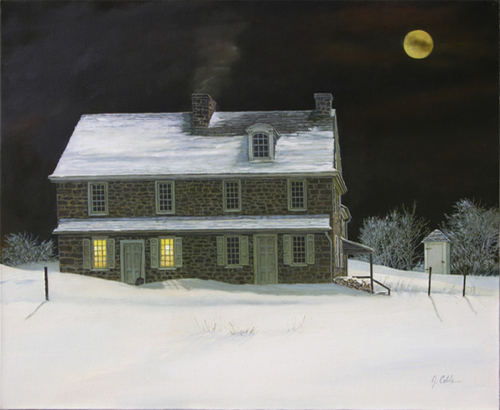
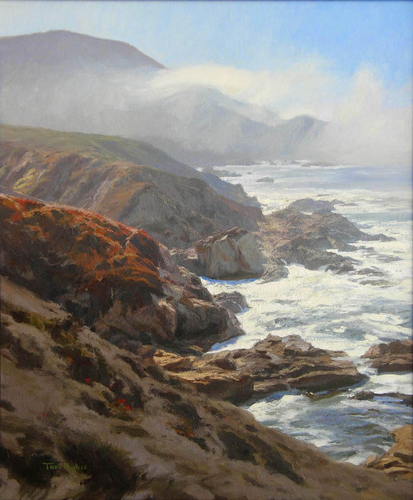
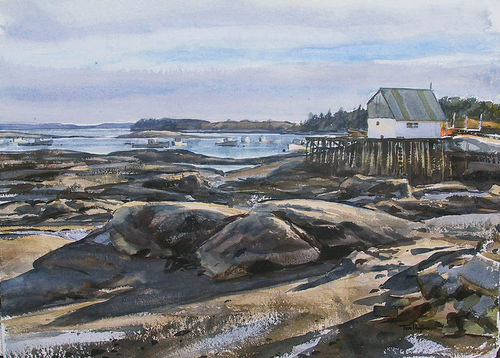
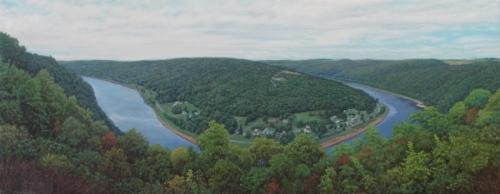
“Figurative” painting is clearly derived from real object sources, and is therefore by definition representational. Within the realm of figurative art we find a variety of styles, including photo-realist, classical, expressionist, impressionist. The variety of subjects for figurative painting is endless, but some of the most common can be categorized as landscapes or portraits.
In abstract painting shape, color, form, and line combine to create a composition that doesn’t draw its inspiration from visual references in the world. As with figurative art, abstract painting can be divided into as many sub-categories as there are abstract artists. The most popular and well known are probably fauvism, cubism and modernism.
In Artspan’s selection of paintings you’ll find a huge variety of techniques, media, and subjects. Our artists work in traditional methods of oil, watercolor, and acrylic, of course, but you’ll also find digital paintings, gouache, encaustic, enamel, and even wine! Choose from a selection of originals you can buy directly from the artist using our safe and fully-integrated shopping cart, or browse fine art prints available in a choice of archival papers or canvas.
In abstract painting shape, color, form, and line combine to create a composition that doesn’t draw its inspiration from visual references in the world. As with figurative art, abstract painting can be divided into as many sub-categories as there are abstract artists. The most popular and well known are probably fauvism, cubism and modernism.
In Artspan’s selection of paintings you’ll find a huge variety of techniques, media, and subjects. Our artists work in traditional methods of oil, watercolor, and acrylic, of course, but you’ll also find digital paintings, gouache, encaustic, enamel, and even wine! Choose from a selection of originals you can buy directly from the artist using our safe and fully-integrated shopping cart, or browse fine art prints available in a choice of archival papers or canvas.